Co-working Spaces Surge as Hybrid Work Models Drive Demand
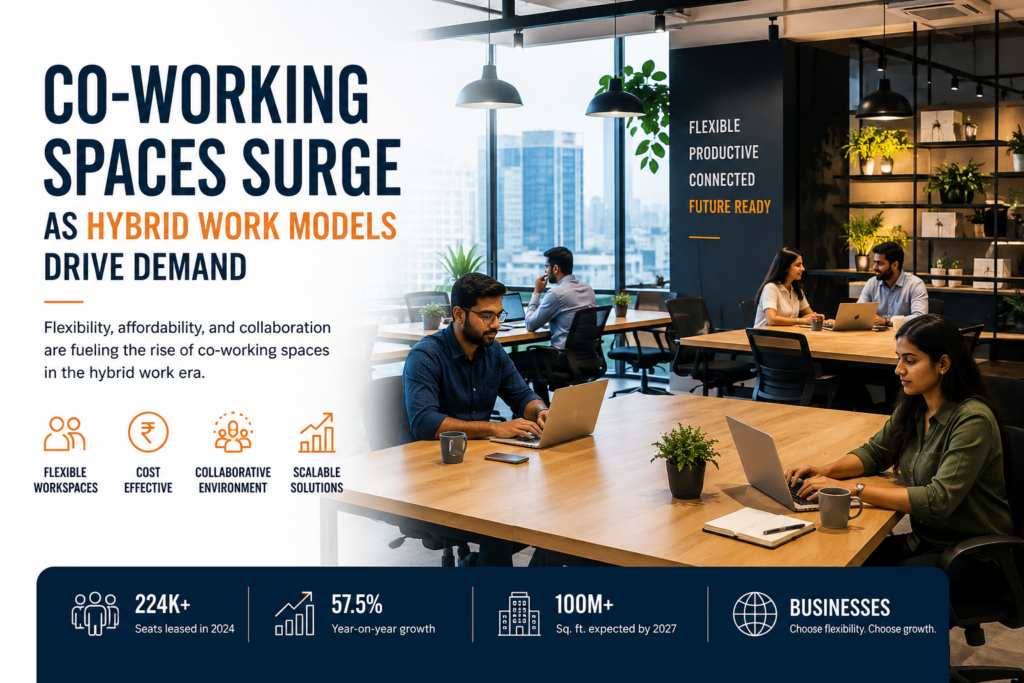
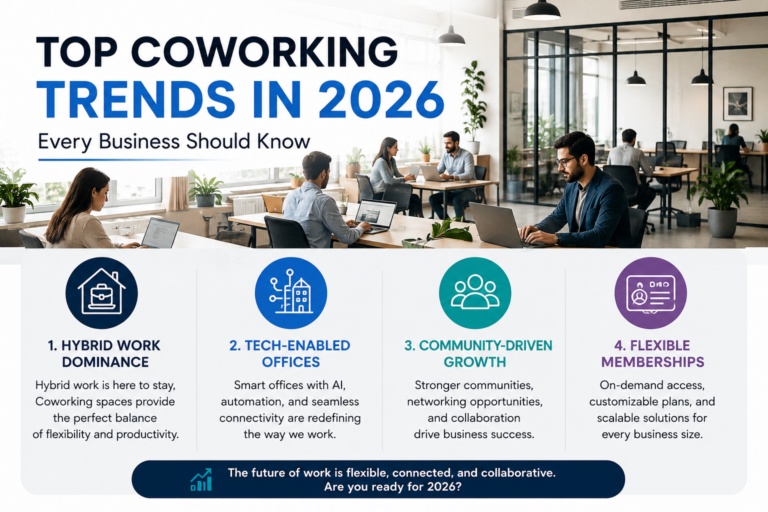
The way people work has changed significantly in recent years. Hybrid work, which combines remote working with office-based collaboration, has become an important part of modern business strategies. As companies look for greater flexibility, co-working spaces are experiencing strong demand from startups, freelancers, SMEs, and large enterprises.
India’s flexible workspace market is expanding rapidly. According to Cushman & Wakefield, flexible workspace operators leased a record 12.4 million square feet in 2024, representing 57.5% year-on-year growth. Around 224,000 seats were leased during the year, highlighting the growing preference for flexible office solutions.
Hybrid Work Is Changing Office Requirements
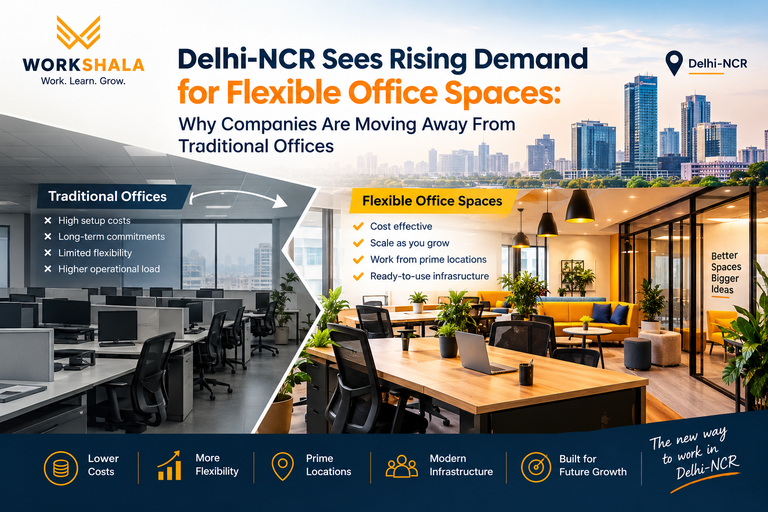
Traditional offices often require long-term leases, large upfront investments, and fixed seating arrangements. Hybrid work has changed these requirements. Employees may work from home on certain days and come into the office when they need collaboration, meetings, or face-to-face interaction.
Co-working spaces provide the flexibility businesses need. Companies can choose dedicated desks, private cabins, meeting rooms, or larger managed offices according to their requirements. They can also increase or reduce their workspace as their teams change.
Cost-Effective and Flexible Solutions
One of the biggest reasons behind the growth of co-working spaces is cost efficiency. Setting up a traditional office involves expenses for furniture, interiors, internet infrastructure, maintenance, utilities, and other operational requirements.
Co-working spaces provide these facilities as part of a ready-to-use workspace. This allows businesses to start operations quickly while reducing the time and resources required for office setup.
Flexible membership plans also allow companies to select workspace solutions based on their team size and working requirements. This makes co-working particularly attractive to growing businesses.
Growing Enterprise Demand
Co-working is no longer limited to freelancers and small startups. Large companies are increasingly using flexible workspaces as part of their real estate strategy. CBRE reports that flexible workspace operators have consistently captured more than 15% of India’s annual office absorption, while more companies are planning to allocate a larger share of their office portfolios to flexible spaces.
Enterprises can use co-working spaces for satellite offices, project teams, temporary expansion, or hybrid workforce requirements. This provides greater agility without committing to large permanent offices.
Technology and Better Work Experiences
Modern co-working spaces are also becoming more technology-driven. High-speed internet, access-control systems, meeting-room technology, workspace apps, and smart office solutions help create efficient working environments.
At the same time, businesses are paying greater attention to employee experience. Modern workspaces increasingly focus on professional interiors, collaborative areas, comfortable workstations, and community-building activities.
The Future of Co-working Spaces
The growth of hybrid work is expected to keep supporting demand for flexible workspaces. Colliers projects that flexible workspace stock across India’s top seven cities could exceed 100 million square feet by 2027, up from 72.3 million square feet in 2025.
For businesses, the future office is likely to be less about owning a fixed amount of space and more about accessing the right workspace when it is needed.
Co-working spaces are therefore becoming an important part of the modern workplace ecosystem. By combining flexibility, convenience, professional infrastructure, and scalability, they provide businesses with a practical solution for succeeding in the hybrid work era.