Co-Working and Remote Work Revolution: How Indian Corporate Industry Is Embracing the Flexible Workforce
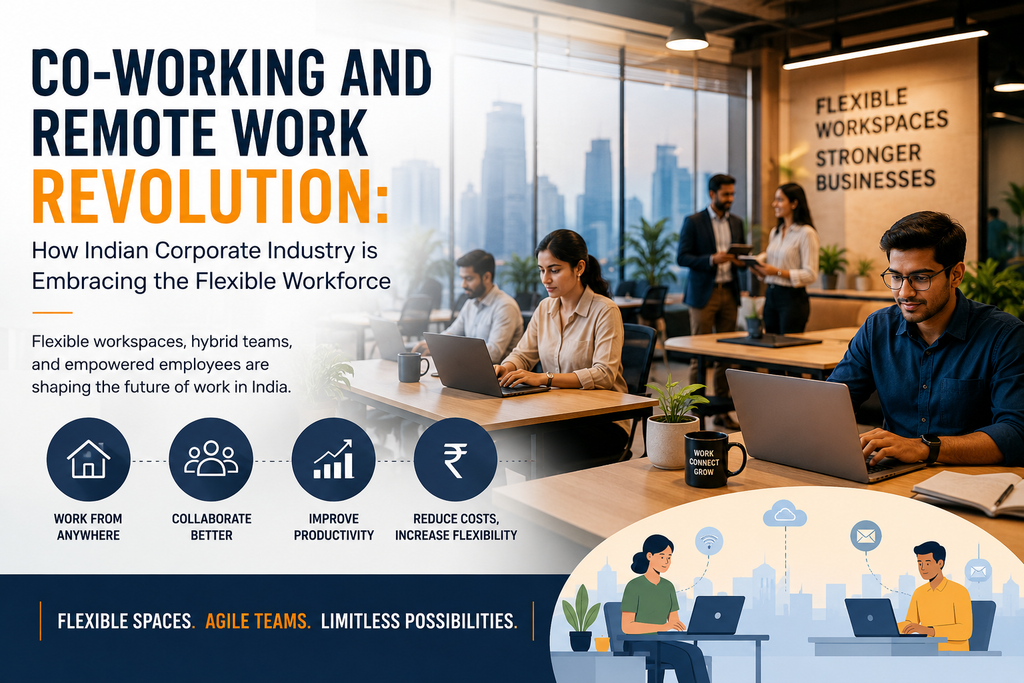
The Indian corporate workplace is undergoing a major transformation. Traditional offices with fixed desks, long-term leases, and rigid working hours are increasingly being replaced by flexible work models. Co-working spaces, remote work, and hybrid working are becoming important parts of how modern businesses operate.
This shift is not just a temporary response to changing workplace needs. It represents a long-term evolution in the Indian corporate industry, giving companies greater flexibility while helping employees achieve better work-life balance.
The Rise of Flexible Work in India
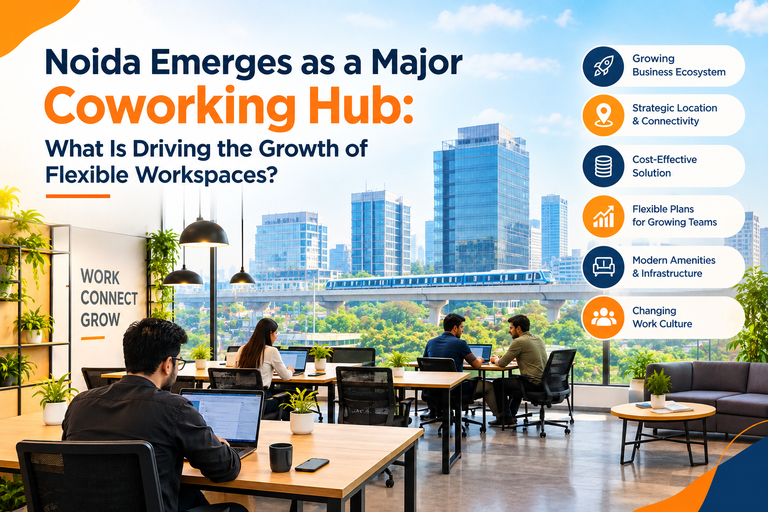
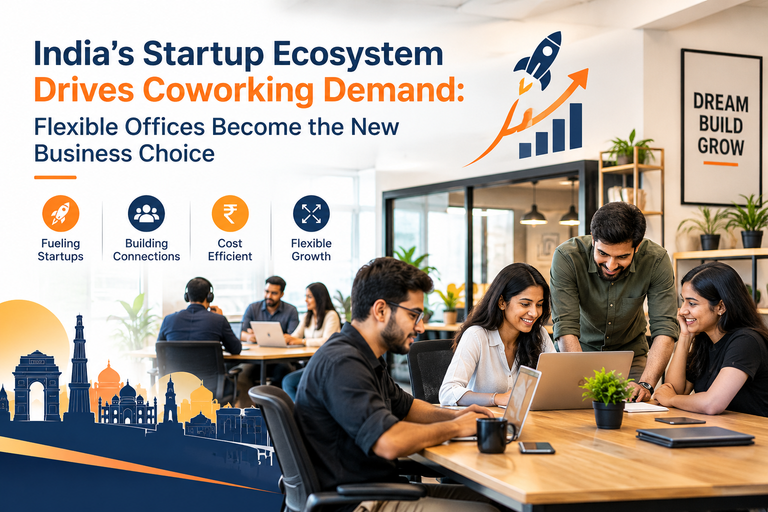
The growth of startups, technology companies, freelancers, and distributed teams has accelerated the demand for flexible workspaces across major Indian cities such as Delhi NCR, Noida, Gurgaon, Bengaluru, Mumbai, and Hyderabad.
Many businesses no longer require every employee to work from a traditional office five days a week. Instead, companies are adopting hybrid work models, where employees divide their time between home and professional workspaces.
This approach allows organizations to reduce unnecessary office expenses while maintaining productivity and collaboration.
Why Companies Are Choosing Co-Working Spaces
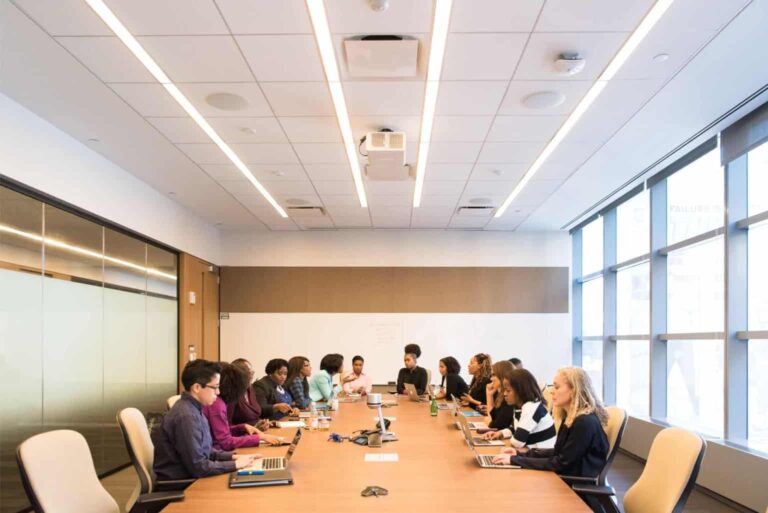
Co-working spaces offer businesses a practical alternative to conventional office setups. Companies can rent desks, private cabins, meeting rooms, or complete managed offices according to their requirements.
One of the biggest advantages is flexibility. Businesses can increase or decrease their workspace as their teams grow or change. This is particularly useful for startups and growing companies that do not want to commit to expensive long-term leases.
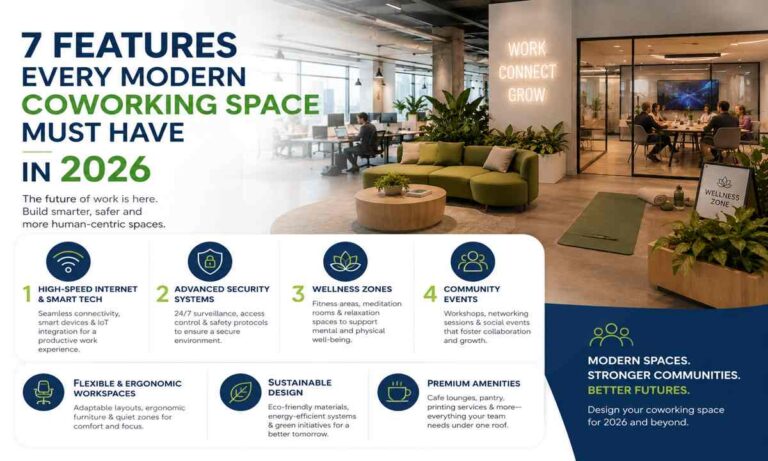
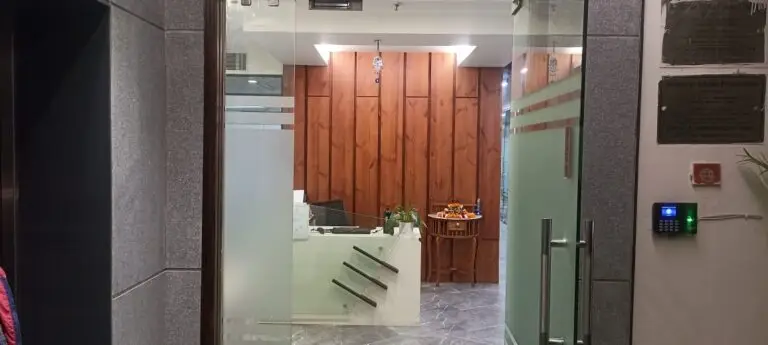
Co-working spaces also provide essential facilities such as high-speed internet, meeting rooms, reception services, professional infrastructure, and comfortable working environments. Businesses can therefore focus on their core operations without spending significant resources on managing an office.
Remote Work Is Changing Employee Expectations
Remote work has also changed what employees expect from their employers. Professionals increasingly value flexibility, convenience, and autonomy.
However, working completely from home is not always ideal. Employees may face distractions, limited workspace, connectivity issues, or a lack of professional interaction. This is where co-working spaces can bridge the gap.
Employees can work remotely while still having access to a professional environment when they need focused work, meetings, networking, or team collaboration.
Hybrid Work: The Future of Corporate Offices
The combination of remote work and physical office infrastructure is creating a strong hybrid workplace model. Companies can maintain a smaller permanent office while using flexible workspace solutions whenever additional capacity is required.
For example, a business with a core team of 30 employees may use a smaller private office and add additional desks or meeting rooms when new projects or teams require them.
This model provides the scalability that traditional office arrangements often lack.
Opportunities for Businesses and Coworking Providers
The flexible workforce is creating new opportunities for businesses in the commercial real estate and coworking sectors. Companies are increasingly looking for workspace solutions that can adapt to their changing requirements.
For coworking providers, this means offering more than just desks. Modern workspaces need to provide technology, privacy, collaboration areas, meeting facilities, professional services, and a strong business community.
Conclusion
India’s corporate industry is moving toward a more flexible and employee-focused workplace culture. Co-working spaces and remote work are no longer alternative concepts—they are becoming essential components of modern business operations.
As hybrid work continues to grow, businesses will increasingly look for flexible, scalable, and cost-effective workspace solutions. For companies seeking professional workspaces without the limitations of traditional offices, coworking can provide the flexibility needed to succeed in the evolving world of work.