Coworking Space Trends in 2026
The way people work is changing rapidly, and coworking spaces are becoming an important part of the modern workplace. In 2026, businesses, startups, freelancers, and remote professionals are looking for offices that offer flexibility, technology, convenience, and a better work experience. India’s flexible workspace sector is expected to continue strong growth, driven by startups, Global Capability Centres (GCCs), corporates, and hybrid work models.
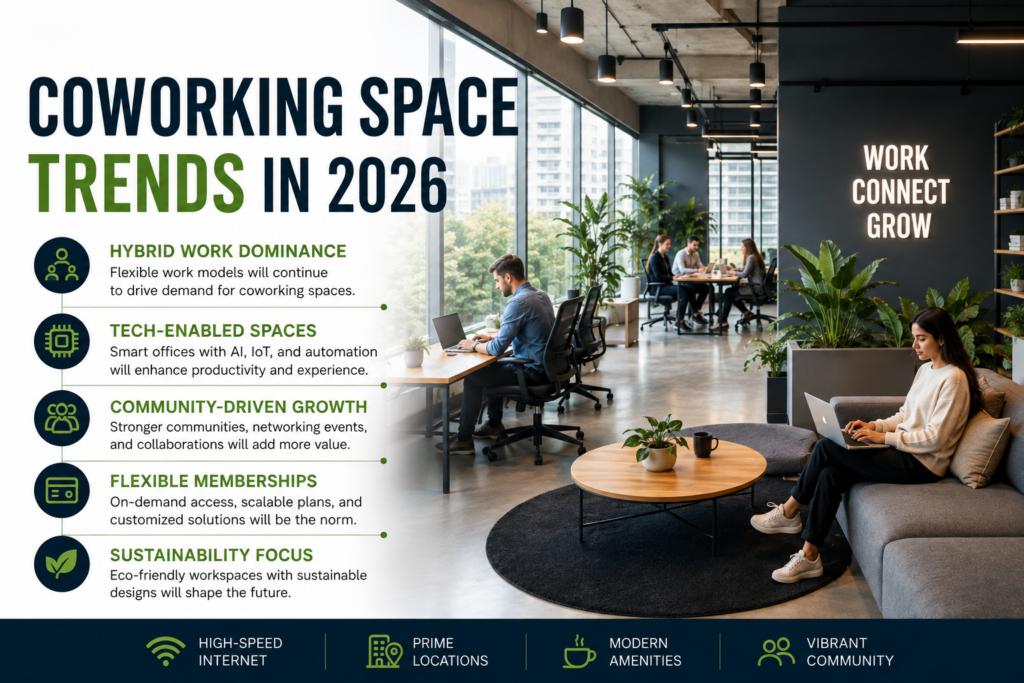
Here are the major coworking space trends in 2026 that are shaping the future of work.
1. Hybrid Work Is Driving Demand
Hybrid work continues to influence how companies use office space. Instead of maintaining large permanent offices, businesses are increasingly choosing flexible workspaces that employees can use when they need to collaborate or meet clients.
Coworking spaces provide companies with flexible desks, private cabins, meeting rooms, and office solutions without requiring long-term commitments.
2. More Demand for Private and Managed Offices
Coworking is no longer limited to open desks. In 2026, businesses are increasingly looking for private cabins, managed offices, and dedicated team spaces.
These options provide privacy and branding while still offering the flexibility and services associated with coworking. This is particularly useful for startups, SMEs, and growing corporate teams that need to scale their office space quickly.
3. Technology-Enabled Workspaces
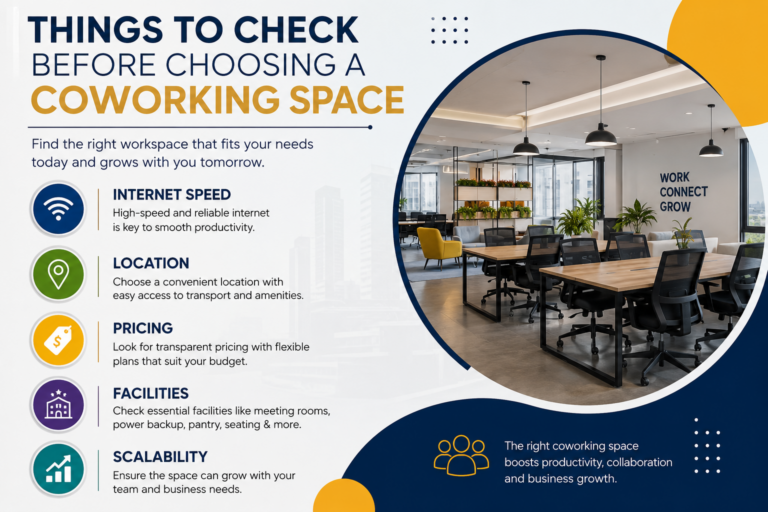
Technology is becoming an essential part of modern coworking spaces. Members increasingly expect high-speed internet, smart access systems, online room booking, digital visitor management, and workspace management apps.
Smart technology can also help operators understand space usage and improve the overall member experience.
4. Focus on Employee Experience
In 2026, companies are looking beyond basic desks and Wi-Fi. They want workspaces that support productivity, collaboration, comfort, and employee well-being.
Modern coworking spaces are therefore investing in comfortable furniture, collaborative areas, meeting rooms, recreational zones, natural lighting, and professional business environments.
5. Flexible Plans and Scalable Offices
Flexibility remains one of the biggest advantages of coworking. Businesses can choose from day passes, hot desks, dedicated desks, private cabins, meeting rooms, and managed offices.
As companies grow or reduce their teams, flexible workspace providers can allow them to increase or decrease their space requirements more easily than traditional office leases.
6. Expansion Beyond Major Cities
The growth of flexible workspaces is also moving beyond traditional metropolitan markets. Industry projections indicate that additional flexible workspace capacity is expected across emerging and Tier-II cities, creating new opportunities for businesses and professionals.
7. Premium and Experience-Driven Coworking
Price is no longer the only deciding factor. According to CBRE, demand in India is shifting toward higher-quality, highly amenitized spaces that provide better employee experiences and stronger business environments.
Conclusion
Coworking spaces in 2026 are evolving from simple shared offices into complete workplace solutions. Hybrid work, private offices, smart technology, flexible memberships, employee-focused facilities, and premium experiences are shaping the industry.
For businesses looking for a cost-effective and scalable office solution, coworking provides the flexibility to adapt to changing workforce and business requirements. As the flexible workspace market continues to grow, coworking spaces are set to play an increasingly important role in the future of work.