How to Reduce Office Expenses Without Sacrificing Quality
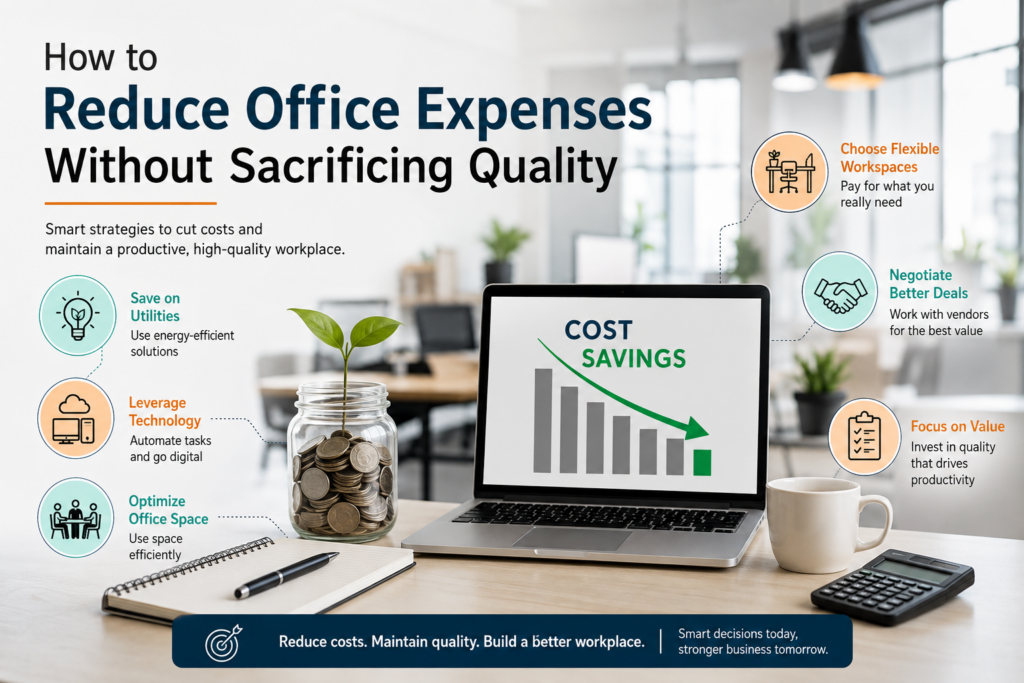
Running an office comes with several expenses, including rent, electricity, maintenance, internet, furniture, office supplies, and employee amenities. For startups and growing businesses, controlling these costs is important for maintaining healthy cash flow. However, reducing expenses does not mean compromising on workplace quality. With the right strategies, businesses can create an efficient and professional workplace while keeping costs under control.
1. Choose a Flexible Office Solution
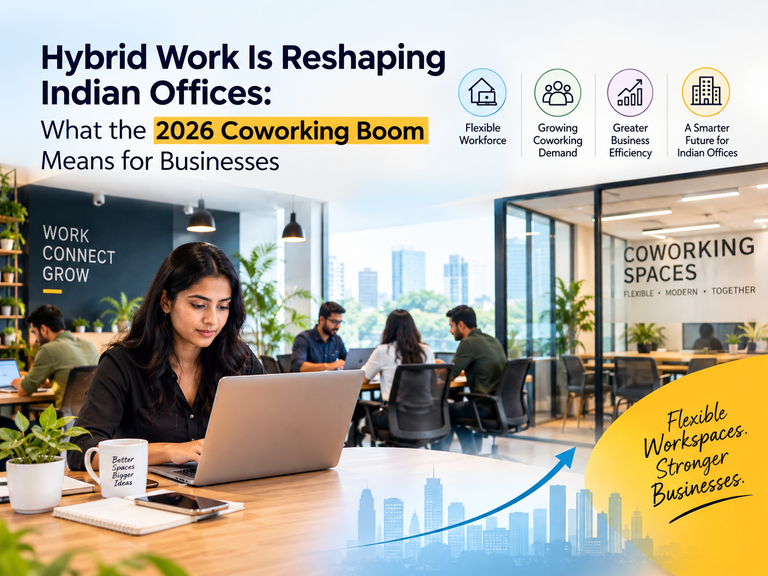
Traditional office leases often require long-term commitments, large security deposits, and additional expenses for furniture and maintenance. A coworking space or managed office can be a more cost-effective alternative.
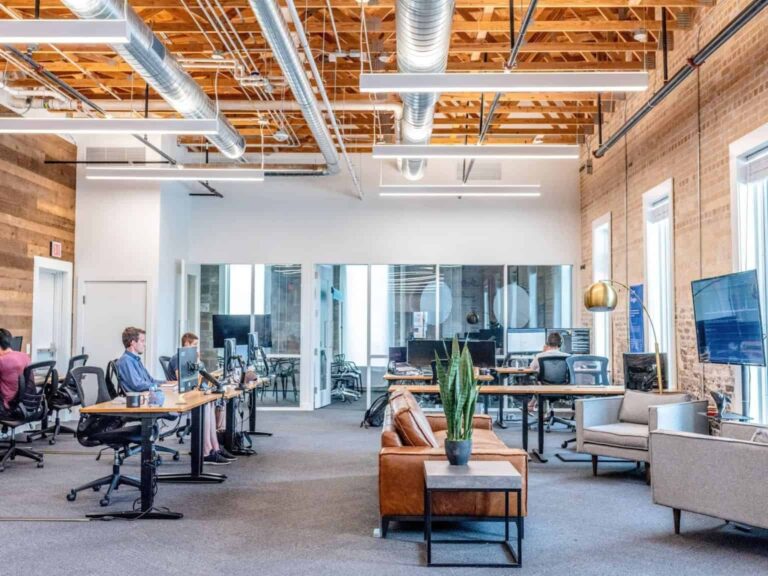
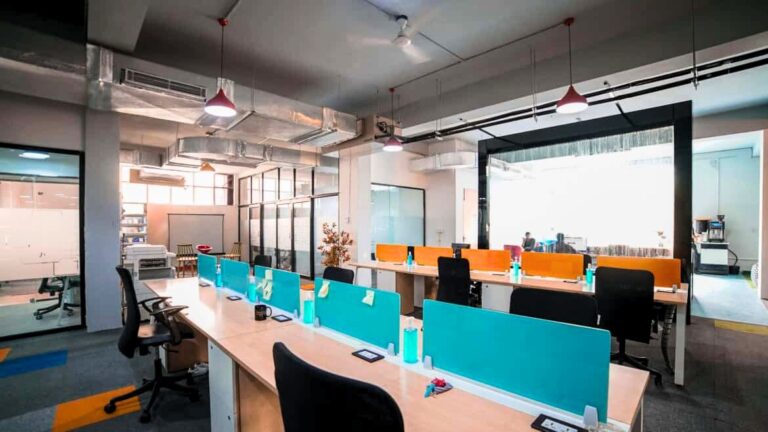
Flexible workspaces typically provide furnished offices, high-speed internet, meeting rooms, reception services, housekeeping, and utilities under one package. Businesses can select the number of seats they actually need and expand as their team grows, avoiding unnecessary rental expenses.
2. Optimize Your Office Space
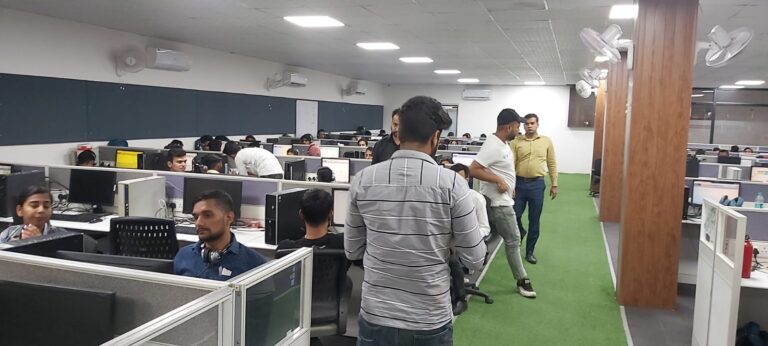
Unused office space can become a significant expense. Review how employees use the workplace and identify areas that are rarely occupied. If your team follows a hybrid or flexible working model, consider reducing the amount of permanent desk space required.
A well-planned office layout can accommodate more employees without making the workplace uncomfortable. Shared desks, hot-desking, and multipurpose meeting areas can help maximize available space.
3. Reduce Energy Consumption
Electricity costs can add up quickly. Simple changes such as using LED lighting, energy-efficient air conditioners, and smart power systems can reduce monthly utility bills.
Encourage employees to switch off lights, computers, and other equipment when they are not in use. Motion-sensor lighting in meeting rooms and common areas can also prevent unnecessary energy consumption.
4. Control Office Supply Costs
Office supplies may seem like small expenses, but they can become substantial over time. Maintain an inventory of stationery, printing materials, and other supplies to avoid over-ordering.
Encourage digital documentation wherever possible to reduce paper and printing costs. Buying frequently used supplies in bulk can also help businesses negotiate better prices.
5. Use Technology to Improve Efficiency
Investing in the right technology can reduce operational expenses while improving productivity. Cloud-based software, digital communication tools, online project management systems, and virtual meeting platforms can minimize paperwork and reduce the need for expensive physical infrastructure.
Automating repetitive administrative tasks can also save employee time and improve overall efficiency.
6. Negotiate With Vendors
Regularly review contracts with internet providers, maintenance companies, office suppliers, and other vendors. Businesses should compare prices and negotiate better terms instead of automatically renewing existing agreements.
Long-term relationships with reliable vendors can sometimes provide discounts, but businesses should still ensure that they are receiving competitive rates.
7. Consider a Hybrid Work Model
A hybrid work model allows employees to work from the office and remotely based on business requirements. This can reduce the amount of office space, furniture, utilities, and other resources required.
Instead of maintaining a large office for occasional use, companies can choose flexible workspace solutions that allow teams to book desks or meeting rooms whenever necessary.
Conclusion
Reducing office expenses without sacrificing quality is possible with careful planning and smarter resource management. From choosing flexible office solutions and optimizing workspace to controlling energy consumption and using technology, businesses can significantly lower operational costs.
For startups, freelancers, and growing companies, coworking and managed office spaces can provide a professional workplace with essential facilities while avoiding many of the expenses associated with traditional offices. The goal should not simply be to spend less, but to spend smarter while maintaining a productive and professional work environment.