Coworking Overtakes IT/ITeS as India’s Top Office Occupier in 2026
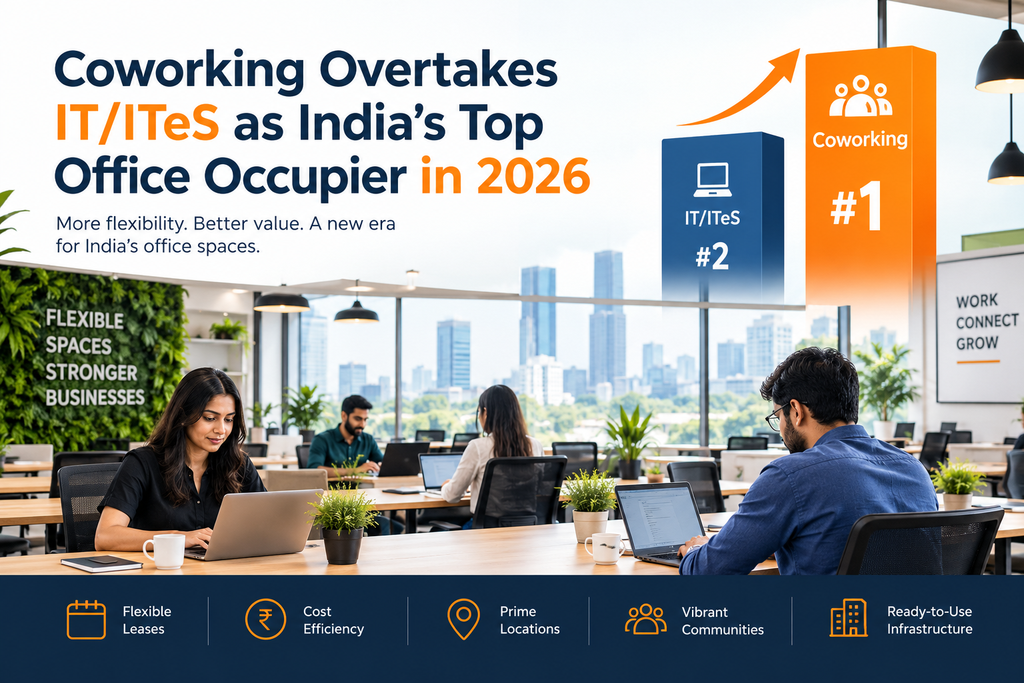
India’s commercial real estate market is experiencing a significant transformation in 2026, with coworking and flexible workspace operators emerging as major drivers of office demand. Traditionally, the IT and IT-enabled services (IT/ITeS) sector dominated office leasing across major cities. However, the growing popularity of flexible workspaces is changing how businesses approach office space.
From startups and freelancers to multinational corporations, companies are increasingly choosing coworking spaces for their flexibility, cost efficiency, and ready-to-use infrastructure. This shift reflects a broader change in workplace strategy across India.
Why Coworking Is Gaining Popularity
One of the biggest reasons behind the growth of coworking spaces is the changing nature of work. Businesses no longer want to commit to long-term leases and large upfront investments when more adaptable options are available.
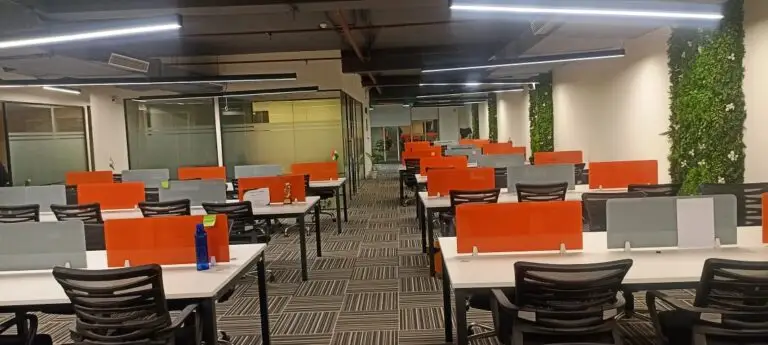
Coworking spaces offer furnished offices, high-speed internet, meeting rooms, reception services, and shared amenities under flexible rental arrangements. Companies can choose dedicated desks, private cabins, or entire office floors according to their requirements.
This flexibility is particularly valuable for businesses experiencing rapid growth, seasonal demand, or changing workforce sizes.
Factors Driving Flexible Workspace Demand in 2026
1. Cost-Effective Office Solutions
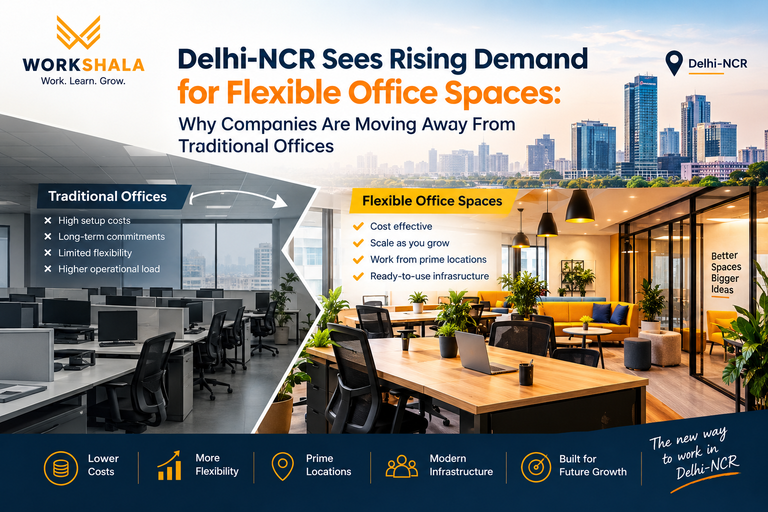
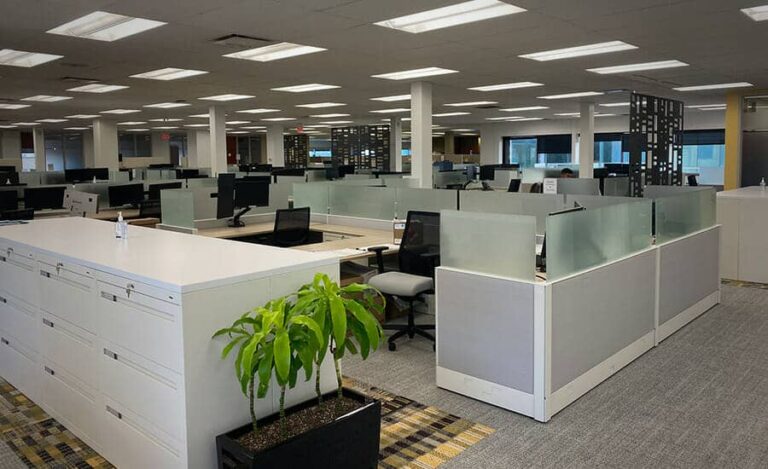
Traditional offices often require significant spending on interiors, furniture, utilities, maintenance, and security deposits. Coworking spaces reduce these initial expenses by providing ready-to-use infrastructure.
For startups and small businesses, this makes it easier to establish a professional workplace without making a substantial capital investment.
2. Expansion of Startups and SMEs
India’s growing startup ecosystem continues to create demand for flexible and affordable workspaces. Small and medium-sized enterprises can establish operations in important business locations without renting large conventional offices.
Coworking operators also allow businesses to expand or reduce their workspace as their teams change.
3. Hybrid Work and Distributed Teams
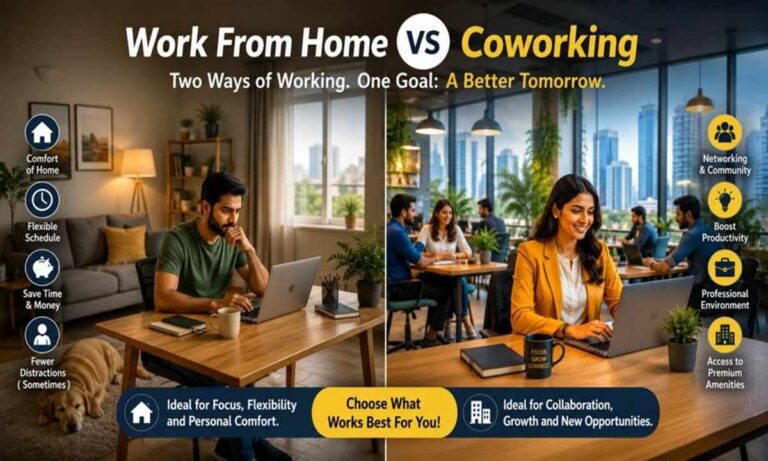
Hybrid work has encouraged companies to rethink their office requirements. Instead of maintaining large offices for employees who may not attend every day, businesses can use coworking facilities for collaboration, meetings, and team activities.
Flexible workspaces also help companies establish a presence in multiple cities without building separate offices in every location.
4. Corporate Demand for Managed Offices
Coworking is no longer limited to freelancers and small startups. Large companies increasingly consider managed offices and enterprise-focused flexible workspaces for project teams, regional offices, and business expansion.
What This Means for India’s Commercial Real Estate Market
The rising importance of coworking reflects a structural shift in India’s office market. Businesses increasingly value flexibility, employee convenience, and operational efficiency alongside location and office size.
Major commercial hubs such as Bengaluru, Delhi-NCR, Mumbai, Hyderabad, Pune, and Chennai remain important markets for office demand. Within Delhi-NCR, locations such as Gurgaon and Noida attract businesses because of their corporate infrastructure, connectivity, and access to talent.
The Future of Coworking in India
The future of flexible workspaces will likely depend on service quality, strategic locations, technology, and the ability to meet enterprise requirements. Operators that provide reliable infrastructure, transparent pricing, secure work environments, and scalable office solutions will be well-positioned to attract businesses.
As workplace expectations continue to evolve, coworking spaces are becoming an important option for companies seeking modern and adaptable offices.
Conclusion
India’s office market is moving towards greater flexibility, and coworking is playing an increasingly important role in this transition. From startups to established corporations, businesses are exploring alternatives to traditional office leases to improve efficiency and support growth.
For companies searching for professional office solutions in Gurgaon and Noida, flexible workspaces offer a practical combination of convenience, infrastructure, and scalability. As demand evolves in 2026, coworking is set to remain a significant force shaping the future of commercial real estate in India.