The Future of Work in India: 10 Coworking Trends Businesses Should Watch in 2026
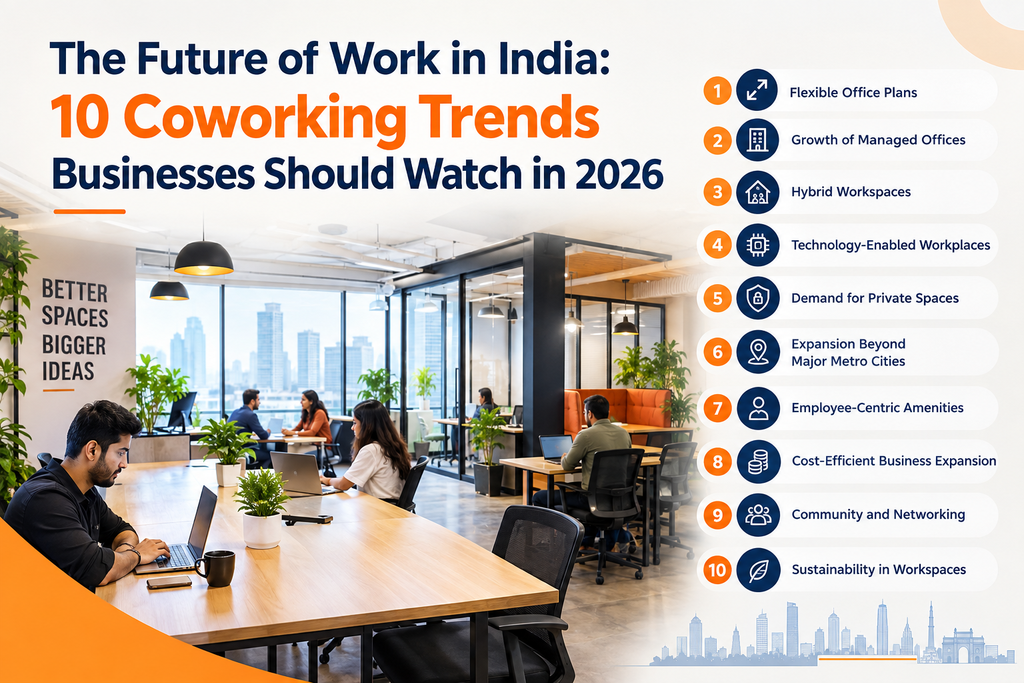
India’s workplace landscape is changing rapidly as businesses look for greater flexibility, cost efficiency, and employee-friendly work environments. Coworking spaces are becoming an important part of this transformation, offering companies scalable offices without the long-term commitments of traditional workplaces. In 2026, several trends are expected to shape how businesses use coworking spaces across major Indian cities.
1. Flexible Office Plans
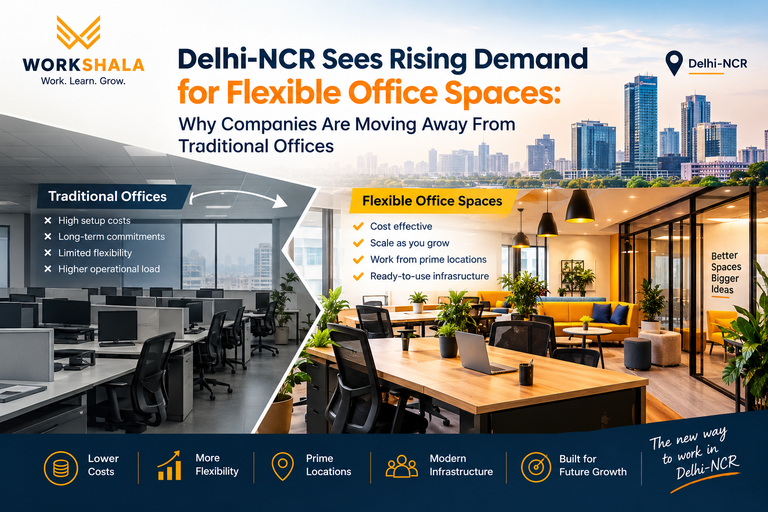
Businesses increasingly want office solutions that can expand or reduce according to their requirements. Flexible memberships, dedicated desks, private cabins, and managed offices allow companies to adjust their workspace as teams change.
2. Growth of Managed Offices
Managed offices are becoming attractive to established companies that want a professional workplace without handling everyday facilities management. Operators can provide furnished spaces, internet, maintenance, reception, and other workplace services.
3. Hybrid Workspaces
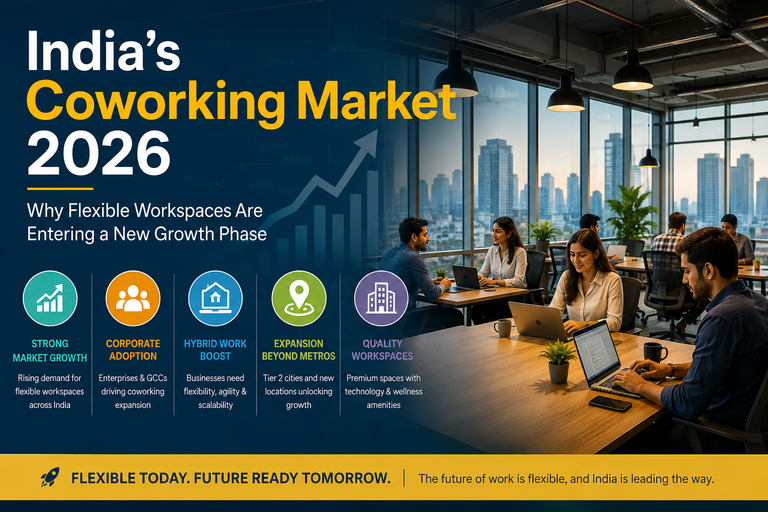
Hybrid work is encouraging businesses to combine remote work with physical office access. Coworking spaces provide employees with professional locations when they need to collaborate, meet clients, or work away from home.
4. Technology-Enabled Workplaces
Smart access systems, high-speed internet, meeting-room technology, digital booking platforms, and workplace management tools are becoming increasingly important. Technology helps businesses create convenient and efficient office experiences.
5. Demand for Private Spaces
While collaboration remains important, companies also need privacy. Private cabins, team rooms, meeting rooms, and dedicated office areas are gaining popularity among startups, agencies, and corporate teams.
6. Expansion Beyond Major Metro Cities
Coworking demand is spreading beyond traditional business hubs. Cities such as Noida, Gurgaon, Pune, Bengaluru, Hyderabad, Chennai, and emerging business locations are attracting companies seeking flexible and well-connected workplaces.
7. Employee-Centric Amenities
Modern employees increasingly value more than just a desk. Comfortable seating, breakout areas, cafeterias, recreational spaces, meeting facilities, and wellness-focused amenities can contribute to a better workplace experience.
8. Cost-Efficient Business Expansion
Coworking enables companies to enter new markets without making large upfront investments in commercial interiors and infrastructure. This can make expansion more flexible, particularly for growing businesses and startups.
9. Community and Networking
Coworking spaces are evolving into business communities rather than simply shared offices. Networking events, workshops, professional interactions, and collaborations can create opportunities for members to connect and grow.
10. Sustainability in Workspaces
Businesses are paying increasing attention to sustainable workplace practices. Energy-efficient infrastructure, responsible resource usage, shared facilities, and environmentally conscious office designs are becoming relevant considerations when selecting workspaces.
Conclusion
The future of work in India is moving toward greater flexibility, technology integration, scalability, and employee-focused workplace experiences. In 2026, coworking and managed office solutions can provide businesses with practical alternatives to conventional long-term offices. Companies that understand these trends can make more informed decisions about their workplace strategy and create environments that support productivity, collaboration, and growth.