Coworking Spaces vs Traditional Offices in 2026: Which One Makes More Business Sense?
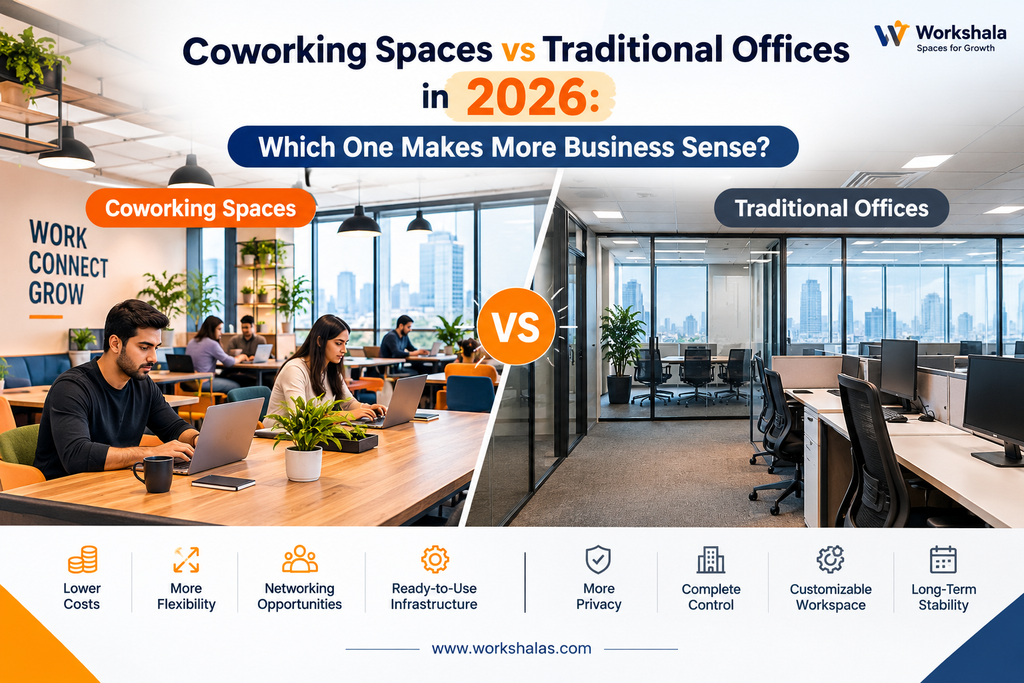
The way businesses work is changing rapidly in 2026. Startups, freelancers, growing companies, and established organizations are increasingly looking for flexible, cost-effective, and professional workplaces. This has created a clear choice between coworking spaces and traditional offices. But which option makes more business sense?
The answer depends on a company’s size, budget, workforce, and future growth plans. However, for many modern businesses, coworking spaces are becoming a practical alternative to conventional offices.
Cost and Investment
Traditional offices generally require a significant upfront investment. Businesses may need to pay security deposits, rent, interior costs, furniture expenses, internet installation charges, electricity bills, maintenance costs, and other operational expenses.
Coworking spaces provide a more flexible cost structure. Businesses can access fully furnished workspaces without spending heavily on office interiors and infrastructure. Companies can select plans according to their requirements, helping them manage their monthly budgets more efficiently.
For startups and small businesses, this lower initial investment can be particularly valuable.
Flexibility and Scalability
One of the biggest advantages of coworking spaces in 2026 is flexibility. Traditional office leases often involve long-term commitments, which can become challenging when a business expands or reduces its workforce.
Coworking spaces allow companies to increase or decrease workspace according to changing requirements. A startup can begin with a few dedicated desks and later move into a private cabin or larger managed office as its team grows.
This scalability helps businesses avoid paying for unused office space.
Professional Infrastructure
Setting up a traditional office requires businesses to arrange furniture, meeting rooms, high-speed internet, reception facilities, and other workplace infrastructure.
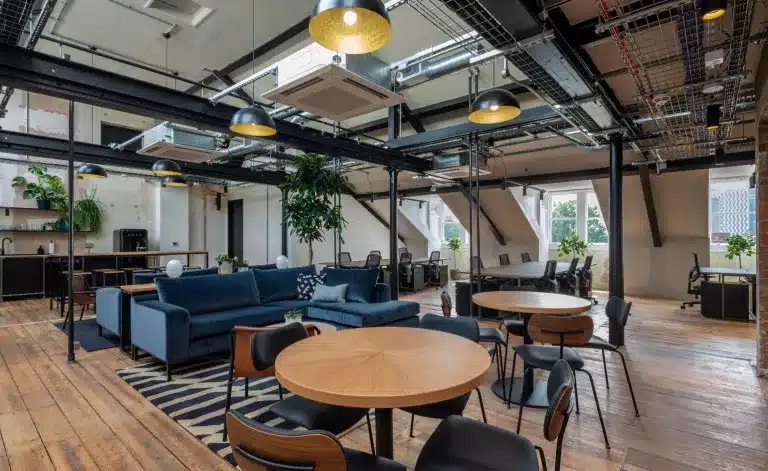
Modern coworking spaces typically provide these facilities as part of the workspace experience. Meeting rooms, conference facilities, reception services, Wi-Fi, workstations, and common areas can help businesses create a professional environment without managing every facility themselves.
This allows business owners and employees to focus more on their core work.
Networking and Business Opportunities
Traditional offices can provide privacy, but they may offer limited opportunities to interact with professionals outside the organization.
Coworking spaces bring together entrepreneurs, freelancers, startups, consultants, and companies from different industries. This environment can encourage networking, collaboration, partnerships, referrals, and knowledge sharing.
For startups looking to build connections and discover new business opportunities, this can be a significant advantage.
Employee Experience and Hybrid Work
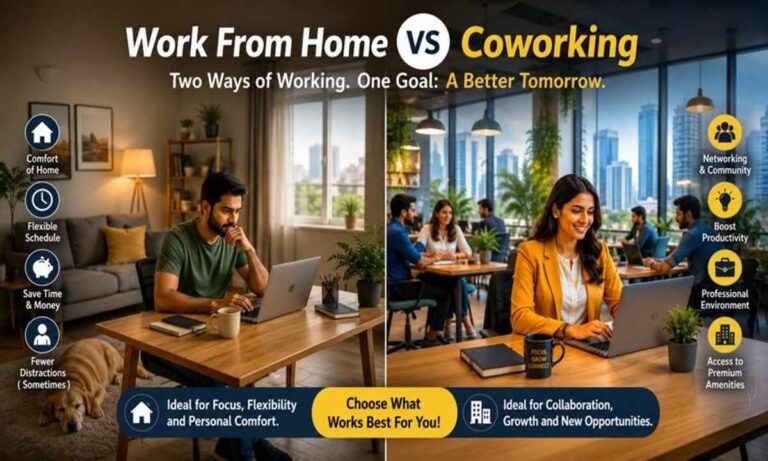
The modern workforce increasingly values flexibility and convenience. Employees may work from home on some days and use a professional workspace on others.
Coworking spaces can support hybrid work models by providing employees with professional work environments without requiring companies to maintain large permanent offices for everyone.
A well-designed workspace can also improve employee interaction, productivity, and workplace experience.
Privacy and Control
Traditional offices still have advantages. Companies that handle sensitive information or require complete control over their workplace may prefer dedicated premises.
However, many coworking providers now offer private cabins, dedicated offices, and managed workspace solutions, giving businesses greater privacy while retaining the benefits of flexible infrastructure.
Which One Makes More Business Sense in 2026?
For startups, freelancers, small businesses, remote teams, and companies experiencing rapid growth, coworking spaces can provide an attractive combination of flexibility, lower setup costs, scalability, and professional infrastructure.
Traditional offices may still make sense for large organizations requiring permanent premises, highly customized environments, or maximum control over their workplace.
Ultimately, the right choice depends on business requirements. But in 2026, coworking spaces are no longer simply an alternative to traditional offices—they are becoming a strategic workplace solution for businesses that value flexibility and efficiency.
For companies in Delhi-NCR, choosing a well-connected coworking space in Noida or Gurgaon can provide the professional environment and flexibility needed to support sustainable business growth.