Hybrid Work Is Reshaping Indian Offices: What the 2026 Coworking Boom Means for Businesses
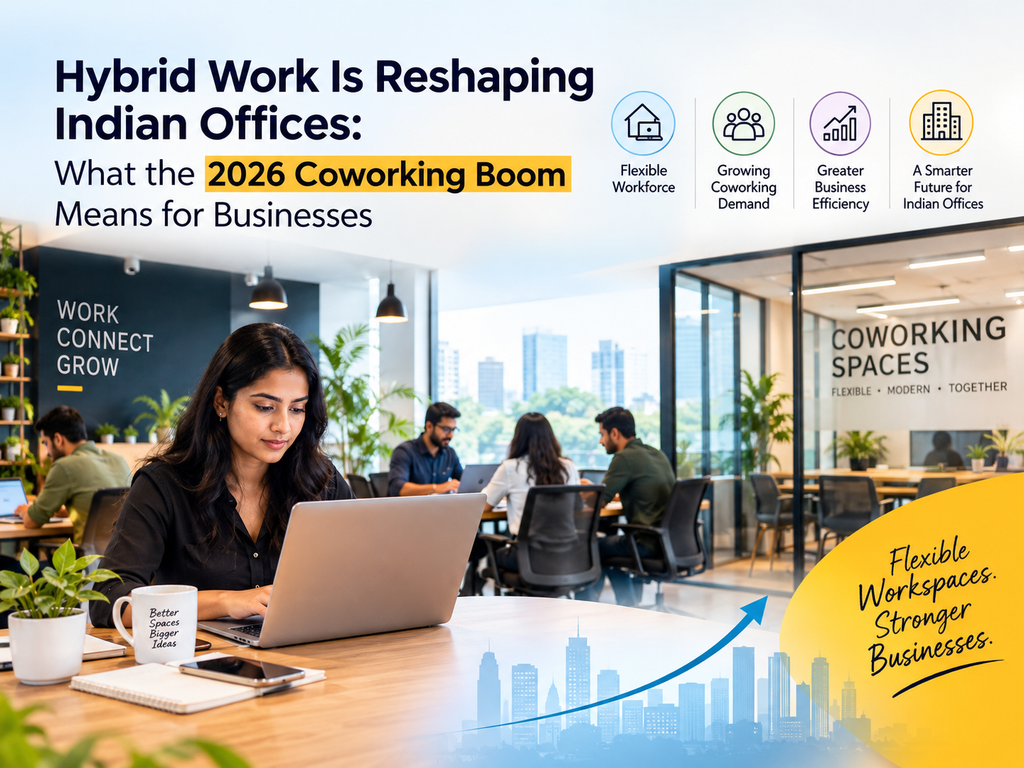
The Indian workplace is undergoing a major transformation in 2026. Hybrid work—combining remote and office-based working—is no longer simply a temporary response to changing work patterns. It has become an important part of how businesses plan their workforce, office space and long-term growth.
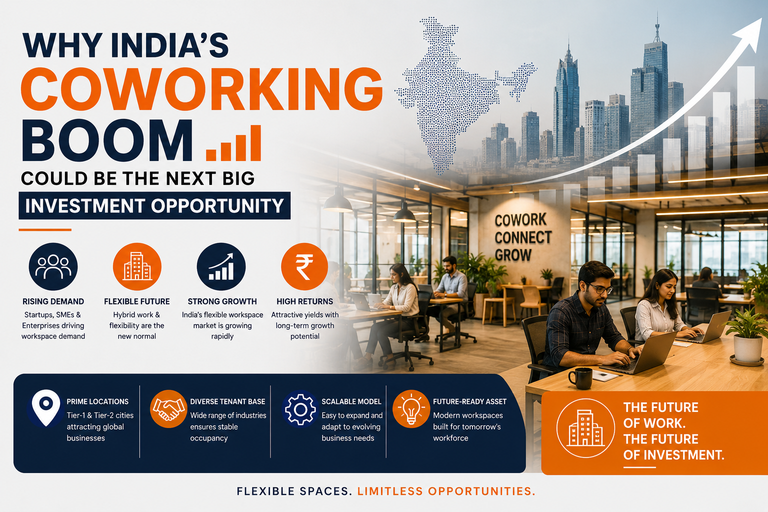
This shift is driving strong demand for coworking and flexible workspaces across India. According to Cushman & Wakefield, flexible workspace operators leased 191,306 seats across India’s top eight cities in H1 2026, a 68.4% increase compared with the same period in 2025. Flexible operators also accounted for nearly 20% of overall office leasing during the period.
Why Hybrid Work Is Driving Coworking Demand
Traditional offices are designed around fixed teams and fixed seating. Hybrid businesses, however, may have employees coming into the office only on certain days. Maintaining a large permanent office in such a situation can increase real-estate and operational costs.
Coworking spaces offer a practical alternative. Businesses can choose private offices, dedicated desks, meeting rooms or managed workspace solutions based on their current requirements. They can also increase or reduce their space as their teams change.
This flexibility is particularly valuable for startups, SMEs, large enterprises and Global Capability Centres (GCCs). GCCs accounted for 44% of flexible workspace seats leased in H1 2026, highlighting their growing role in the sector.
From Cost Saving to Workplace Experience
The modern coworking industry is also moving beyond the idea of simply providing affordable desks. Businesses increasingly want professional, technology-enabled and employee-friendly workplaces.
According to CBRE’s 2026 India Office Occupier Survey, 67% of occupiers expect flexible workspaces to form part of their office portfolio within the next two years. The survey also highlights the importance of workplace quality, connectivity and employee experience when companies select office locations.
This means coworking providers are investing in high-quality interiors, reliable internet, meeting facilities, collaboration areas, technology and hospitality-focused services.
What This Means for Businesses
For businesses, the 2026 coworking boom creates an opportunity to rethink office strategy. Instead of committing to large conventional leases, companies can adopt a core-plus-flex model—maintaining a permanent office while using flexible workspace for expansion, project teams, satellite offices or changing workforce requirements.
This approach can help companies control capital expenditure, enter new markets faster and scale their teams without lengthy real-estate commitments. Colliers also identifies rising flex adoption, GCC expansion and technology-enabled workplaces as key drivers of India’s office market in 2026.
The Future of Indian Offices
Hybrid work is not eliminating the office; it is changing its purpose. Offices are increasingly becoming spaces for collaboration, meetings, innovation, team building and company culture rather than simply places where employees sit every day.
As businesses continue to prioritize flexibility and efficiency, coworking spaces are likely to become an even more important part of India’s commercial real-estate ecosystem. The future office will be more adaptable, technology-driven and employee-focused—and flexible workspaces will be at the centre of this transformation.
For businesses looking to grow without being restricted by traditional office models, 2026 could be the year when flexible workspace becomes a strategic business advantage rather than just an alternative to conventional offices.