Coworking vs Traditional Office: Cost Comparison (2026)
As businesses continue to embrace hybrid work and flexible operations in 2026, one important question remains: Should you choose a coworking space or a traditional office? While both options have their advantages, the cost difference is often the deciding factor for startups, SMEs, and even large enterprises.
Let’s compare the real costs of coworking spaces and traditional office setups to help you make the right decision.
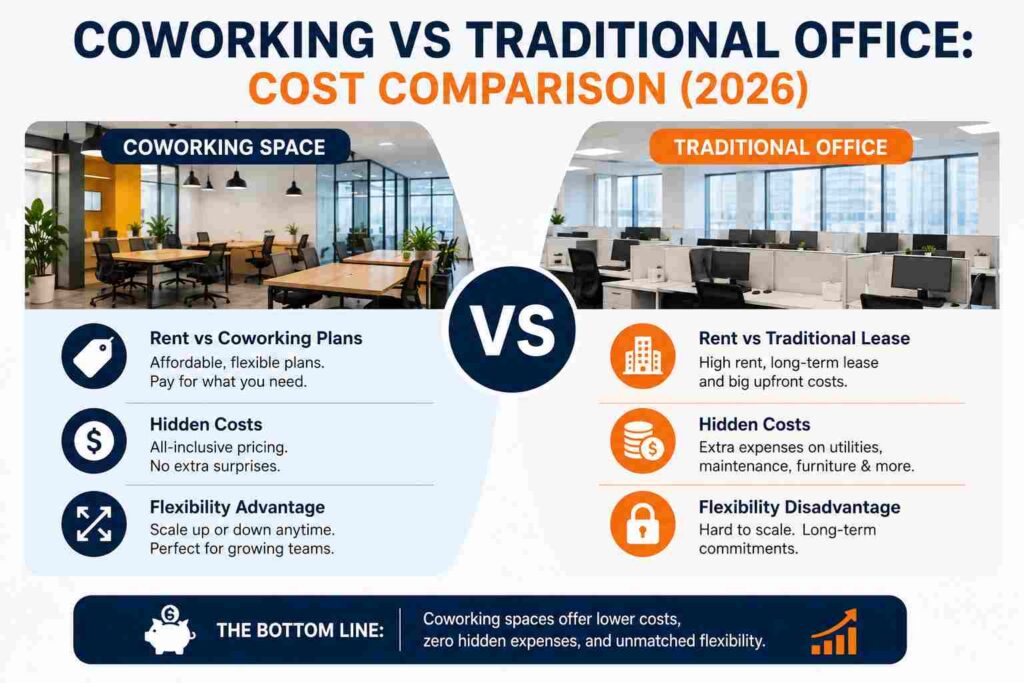
1. Rent: Traditional Office vs Coworking Plans
The biggest expense for any business is office rent.
With a traditional office, companies typically sign long-term leases ranging from 3 to 9 years. Along with monthly rent, businesses usually need to pay security deposits, maintenance charges, brokerage fees, and interior setup costs before moving in.
On the other hand, coworking spaces offer flexible pricing plans. Businesses can choose from hot desks, dedicated desks, private cabins, or managed office spaces based on their team size. Monthly plans include most essential amenities, making budgeting much easier.
Example:
- Traditional Office:
- High monthly rent
- Large security deposit
- Long-term lease commitment
- Coworking Space:
- Affordable monthly membership
- No heavy upfront investment
- Flexible monthly or yearly plans
For startups and growing companies, coworking spaces significantly reduce financial pressure.
2. Hidden Costs You Might Overlook
Many businesses only consider office rent when calculating expenses. However, traditional offices come with several hidden costs that quickly add up.
These include:
- Office furniture
- Internet installation
- Electricity bills
- Housekeeping staff
- Reception services
- Pantry setup
- Office maintenance
- Security services
- Printer and office equipment
- Repair and utility expenses
All these costs are managed separately, requiring additional time and budget.
In contrast, coworking spaces bundle these services into a single monthly payment. Businesses enjoy fully furnished offices, high-speed Wi-Fi, meeting rooms, housekeeping, reception support, and pantry access without worrying about separate bills.
This all-inclusive pricing makes coworking a much more predictable and cost-efficient solution.
3. Flexibility Gives Businesses an Edge
Business needs change quickly in today’s market. Hiring new employees, expanding teams, or reducing office space should not become a financial burden.
Traditional offices offer very little flexibility. Once you sign a lease, increasing or reducing office space becomes difficult and often expensive.
Coworking spaces are designed for flexibility.
Whether you need:
- 5 desks today
- 20 seats next month
- A private cabin next quarter
- A managed office for an entire department
You can scale your workspace without relocating or breaking lease agreements.
This flexibility is especially valuable for startups, IT companies, marketing agencies, consultants, remote teams, and project-based businesses.
Which Option Saves More Money?
When comparing the overall cost, coworking spaces often deliver better value because businesses avoid major capital investments.
Traditional offices usually require spending on:
- Office interiors
- Furniture
- Networking infrastructure
- Utility management
- Administrative staff
Businesses can focus their budget on hiring talent, marketing, technology, and business growth instead of office maintenance.
Who Should Choose Coworking?
Coworking spaces are ideal for:
- Startups
- Freelancers
- Small businesses
- Growing teams
- Remote employees
- Corporate project teams
- Companies expanding into new cities
If your business values flexibility, lower operational costs, and professional infrastructure, coworking is often the smarter choice.
Final Thoughts
In 2026, businesses are prioritizing agility, cost savings, and employee experience. While traditional offices still suit organizations needing complete control over their workspace, coworking spaces have become the preferred solution for companies seeking affordable, flexible, and fully managed office environments.
By eliminating hidden costs, reducing upfront investment, and offering scalable workspace options, coworking allows businesses to operate more efficiently while maintaining a professional presence.
Whether you’re launching a startup, expanding your team, or looking to optimize office expenses, coworking spaces provide a future-ready solution that balances cost, convenience, and flexibility.