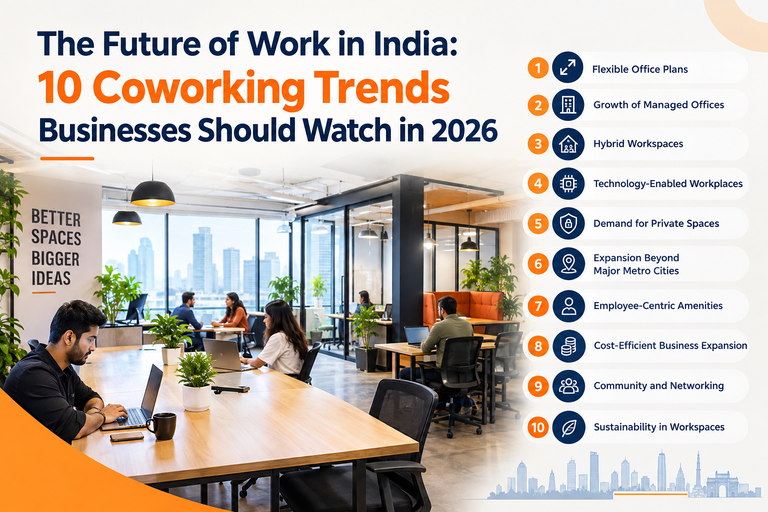
Managed Offices and Coworking Spaces Gain Momentum in India: The Future of Corporate Real Estate
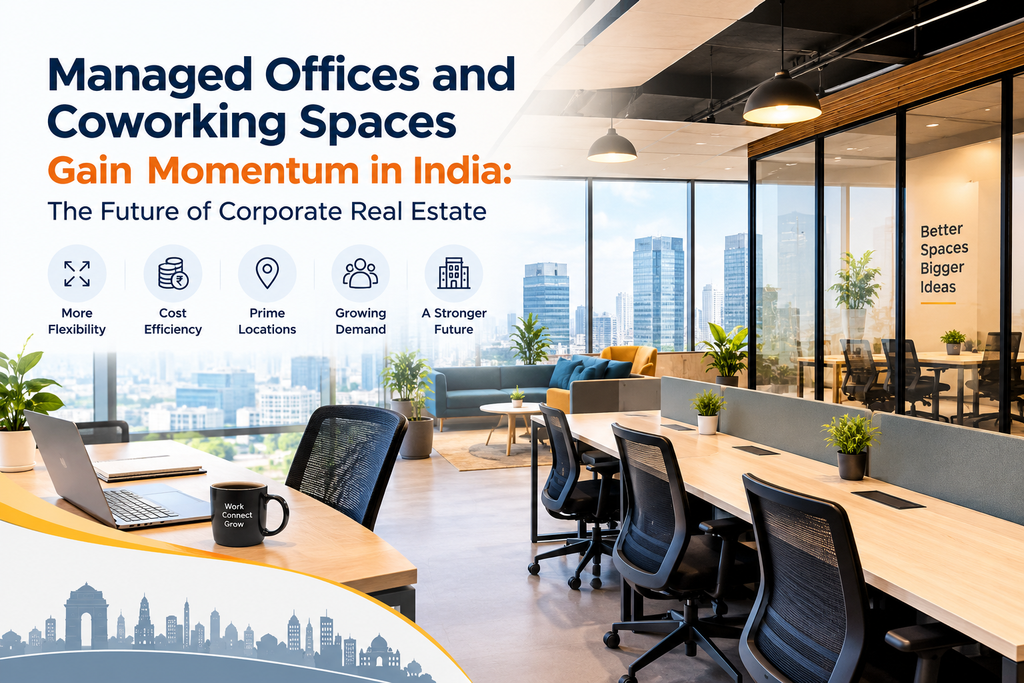
India’s corporate real estate market is undergoing a major transformation as businesses increasingly move away from traditional long-term office leases toward flexible workspace solutions. Managed offices and coworking spaces are gaining momentum across major business hubs, offering companies greater flexibility, cost efficiency, and access to professionally managed work environments.
One of the biggest reasons behind this shift is the changing nature of business operations. Startups, growing companies, enterprises, and remote-first organizations require office spaces that can adapt to changing workforce requirements. Instead of committing to large spaces for several years, companies can choose managed offices or coworking spaces based on their current seating and operational needs.
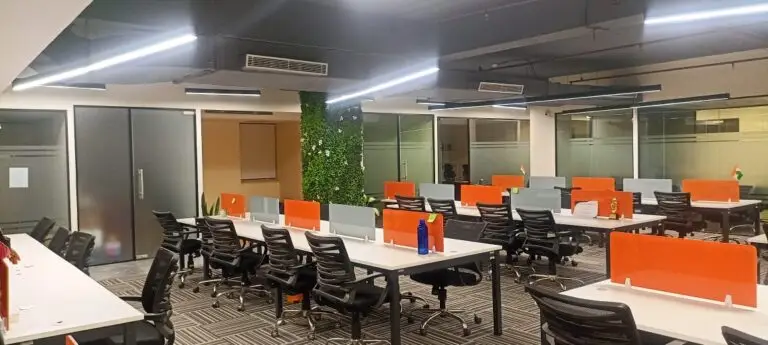
Managed offices provide businesses with ready-to-use workspaces equipped with furniture, internet connectivity, meeting rooms, reception facilities, security, and other essential amenities. This allows companies to begin operations quickly while reducing the time and effort involved in setting up a conventional office. For established businesses, managed offices can also support expansion into new cities without requiring significant upfront investment.
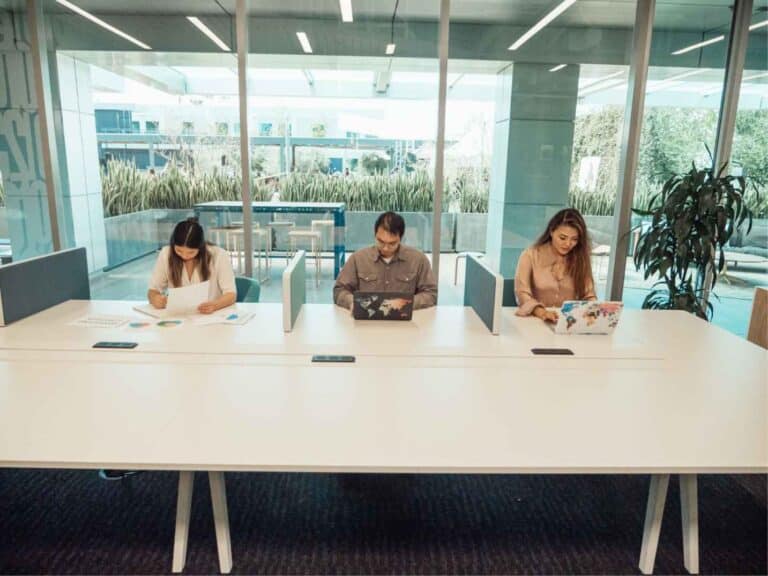
Coworking spaces, meanwhile, have become an important part of India’s modern workplace ecosystem. They provide dedicated desks, private cabins, meeting rooms, shared work areas, and flexible office solutions. These spaces are particularly useful for freelancers, entrepreneurs, startups, small businesses, and companies with hybrid workforces.
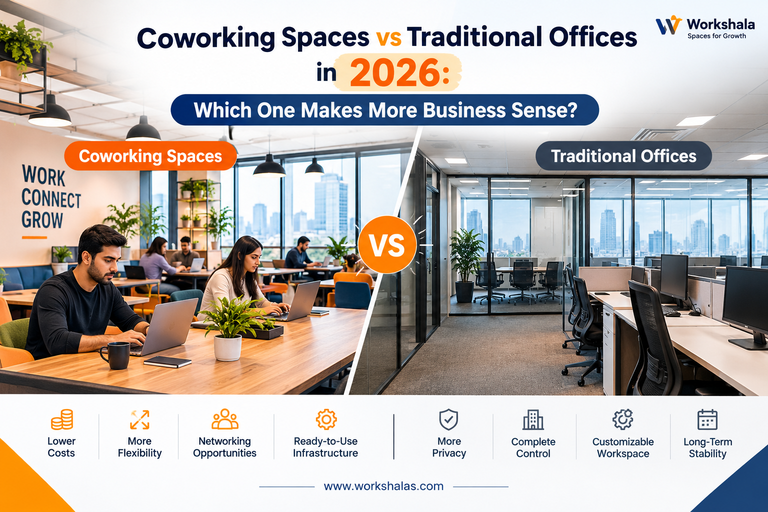
Cost efficiency is another important factor driving demand. Traditional offices often involve expenses related to interiors, furniture, maintenance, utilities, security, and long-term leases. Flexible workspace providers combine many of these services into a single workspace solution, helping businesses manage their operational expenses more effectively.
Location is also playing an important role. Businesses increasingly prefer workspaces in well-connected commercial areas close to metro stations, major highways, residential communities, and established business districts. Cities such as Delhi-NCR, Bengaluru, Mumbai, Hyderabad, Pune, Chennai, and Gurgaon are witnessing growing demand for flexible office solutions.
The rise of hybrid and flexible working models has further strengthened this trend. Companies may not require permanent desks for every employee, but they still need professional spaces for collaboration, meetings, client interactions, and team activities. Coworking and managed offices can provide this flexibility without requiring companies to maintain large underutilized offices.
Technology is also shaping the future of corporate real estate. Smart access systems, digital workspace management, high-speed connectivity, meeting-room booking platforms, and app-based services are making flexible offices more efficient and convenient.
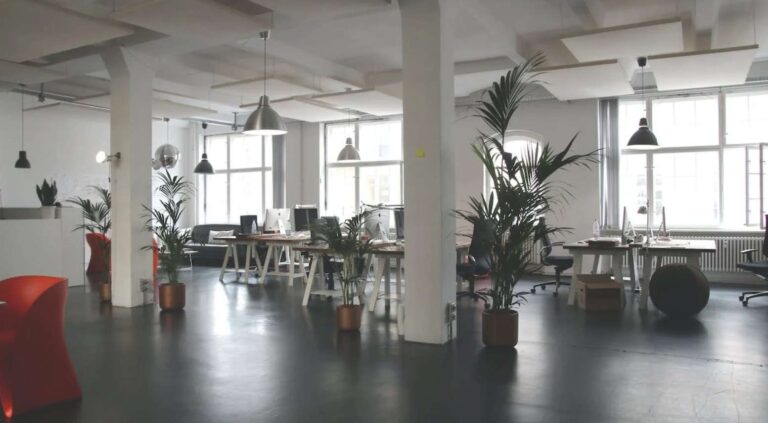
As businesses continue to prioritize agility, scalability, and operational efficiency, managed offices and coworking spaces are expected to become an increasingly important part of India’s corporate real estate landscape. Rather than completely replacing traditional offices, flexible workspaces are creating an alternative model that allows businesses to choose office solutions according to their changing requirements.
For companies looking to expand, reduce setup time, or create a flexible workplace, managed offices and coworking spaces offer a practical solution for the evolving future of work in India.