India’s Startup Ecosystem Drives Coworking Demand: Flexible Offices Become the New Business Choice
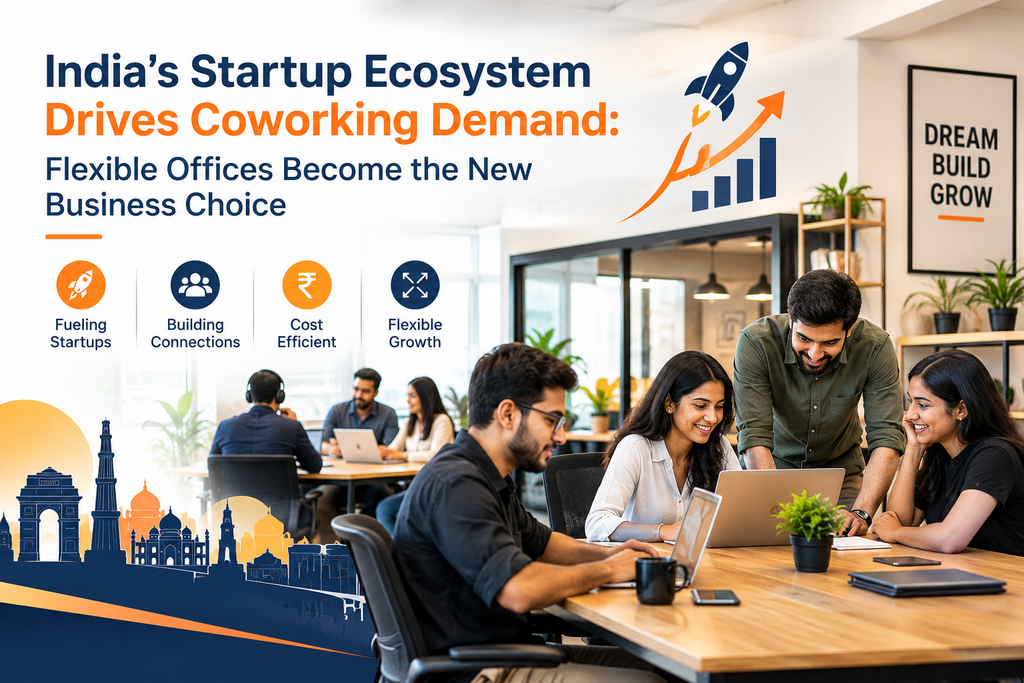
India’s startup ecosystem has grown rapidly, creating new opportunities for entrepreneurs, freelancers, small businesses, and growing teams. As startups look for practical ways to manage costs while maintaining professional work environments, coworking spaces are becoming an increasingly popular business choice. Flexible offices offer startups the freedom to scale, access modern facilities, and work from strategic business locations without the long-term commitments associated with traditional offices.
Startups Are Changing Workplace Requirements
Traditional offices often require businesses to sign long-term leases, invest heavily in furniture and infrastructure, and manage expenses such as maintenance, internet, electricity, and office equipment. For startups operating with limited budgets, these commitments can make expansion difficult.
Coworking spaces provide an alternative by offering ready-to-use workspaces with flexible plans. Startups can choose dedicated desks, private cabins, meeting rooms, or larger managed offices according to their requirements. This flexibility allows businesses to focus more resources on product development, marketing, hiring, and customer acquisition.
Flexible Offices Support Business Growth
One of the biggest advantages of coworking spaces is scalability. Startup teams can change their workspace requirements as the business grows. A company may begin with a few dedicated desks and later move into a private cabin or a larger managed office without having to relocate to an entirely new commercial building.
This adaptability is particularly useful for startups experiencing rapid hiring or project-based growth. Flexible workspace providers can offer different configurations, allowing companies to expand or reduce their office requirements according to business needs.
Cost Efficiency Matters for Startups
Managing operational costs is a major priority for early-stage businesses. Setting up a conventional office can involve significant upfront expenses, including security deposits, furniture, technology infrastructure, interior work, and office administration.
Coworking spaces reduce many of these initial costs by providing furnished and operational workplaces. Businesses generally pay according to the space and services they need, making budgeting more predictable. This can be particularly valuable for startups that want to preserve capital for core business activities.
Professional Infrastructure Without the Complexity
A professional workplace can also help startups create a stronger impression among clients, investors, employees, and business partners. Modern coworking spaces commonly provide meeting rooms, high-speed internet, reception facilities, common areas, and other workplace amenities.
Having access to professional infrastructure allows small companies to operate with the appearance and functionality of an established business without building everything from scratch.
Networking Creates New Opportunities
Coworking spaces bring together entrepreneurs, consultants, freelancers, startups, and established businesses under one roof. This creates opportunities for networking, collaboration, knowledge sharing, and potential partnerships.
For startup founders, being surrounded by professionals from different industries can provide valuable connections. Informal conversations and community events can sometimes lead to referrals, collaborations, or new business opportunities.
Strategic Locations Strengthen Accessibility
Location remains an important factor when choosing an office. Startups want workplaces that are accessible to employees and convenient for clients and partners. Major business hubs in cities such as Delhi-NCR, Bengaluru, Mumbai, Hyderabad, and Pune have seen increasing interest in flexible workspace solutions.
Coworking spaces located near metro stations, commercial districts, and major transportation routes can make daily commuting easier while providing businesses with a professional address.
The Future of Startup Workspaces
As India’s startup ecosystem continues to evolve, workplace requirements are also changing. Businesses increasingly value flexibility, cost control, scalability, and access to professional infrastructure. Coworking spaces address these requirements by providing workspace solutions that can adapt to different stages of business growth.
For startups, flexible offices are no longer simply an alternative to traditional offices. They are becoming a practical business strategy for building teams, controlling operational costs, and creating an adaptable workplace. As entrepreneurship continues to expand across India, coworking spaces are positioned to remain an important part of the country’s evolving business landscape.