India’s Coworking Market 2026: Why Flexible Workspaces Are Entering a New Growth Phase
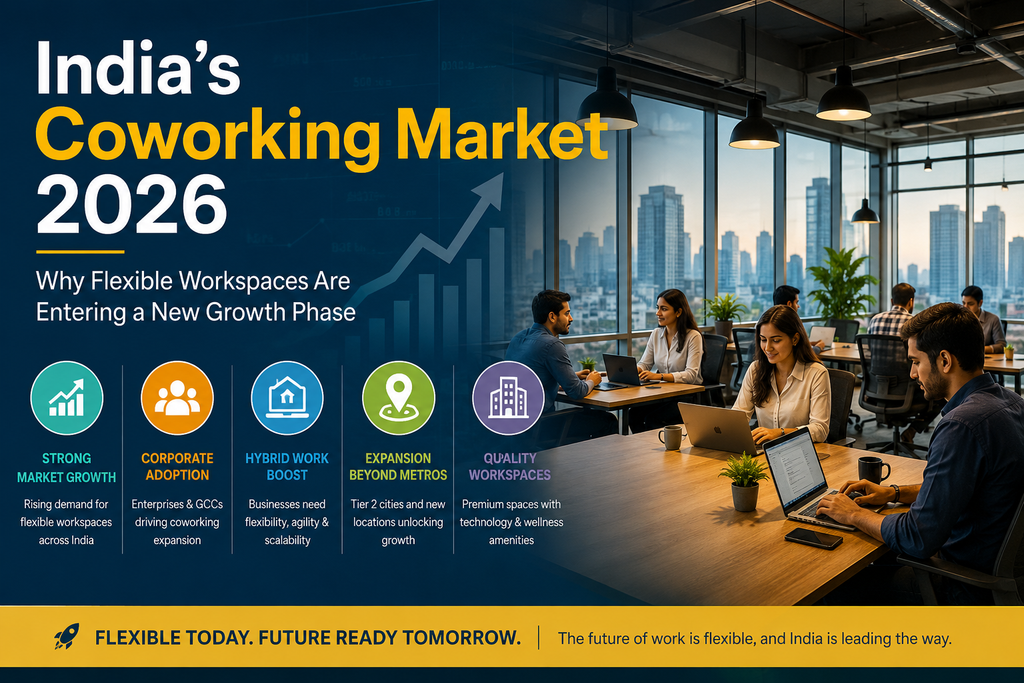
India’s coworking and flexible workspace market is entering a significant new phase in 2026. What was once primarily associated with freelancers, startups, and small businesses has now become an important part of corporate real estate strategy. Companies are increasingly choosing flexible offices because they provide scalability, cost efficiency, and faster access to professional workplaces.
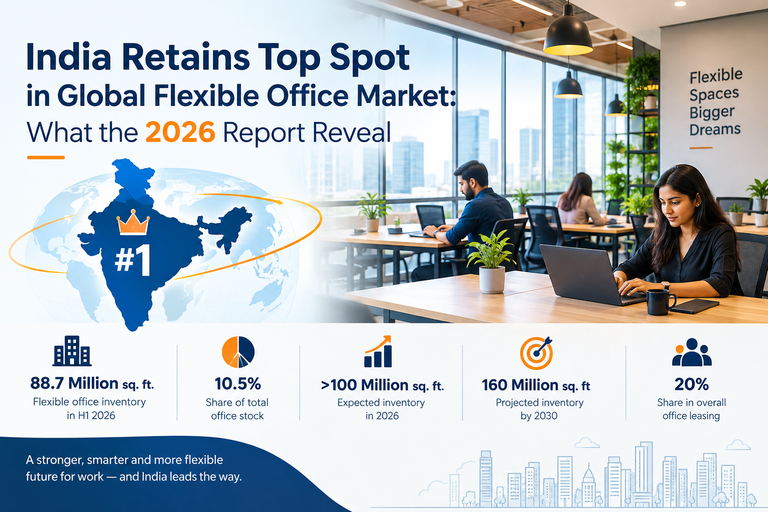
According to Cushman & Wakefield, flexible workspace operators leased 191,306 seats across India’s top eight cities during H1 2026, representing a 68.4% year-on-year increase. Flexible operators also accounted for nearly 20% of total office leasing activity during the period.
The Rise of Corporate Coworking
One of the biggest changes in India’s coworking market is the growing participation of large enterprises. Businesses need office space that can adapt quickly when teams expand, relocate, or adopt hybrid working models.
Global Capability Centres (GCCs) have become a major demand driver. In H1 2026, GCCs accounted for 44% of flexible workspace seat leasing, highlighting how large global companies are incorporating flexible offices into their expansion strategies.
Hybrid Work Is Driving Flexibility
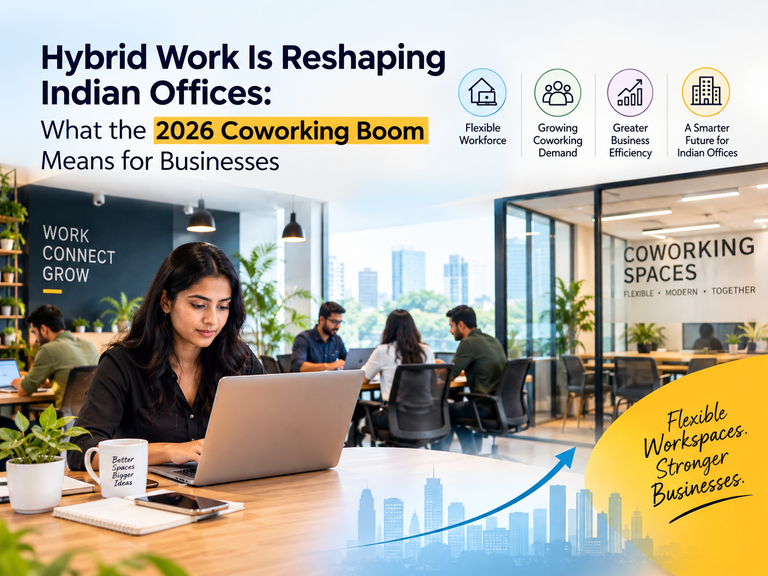
The modern workplace is no longer limited to a fixed traditional office. Employees may work from home on some days and collaborate from an office on others. This has created demand for workspaces that offer flexibility without compromising on professional infrastructure.
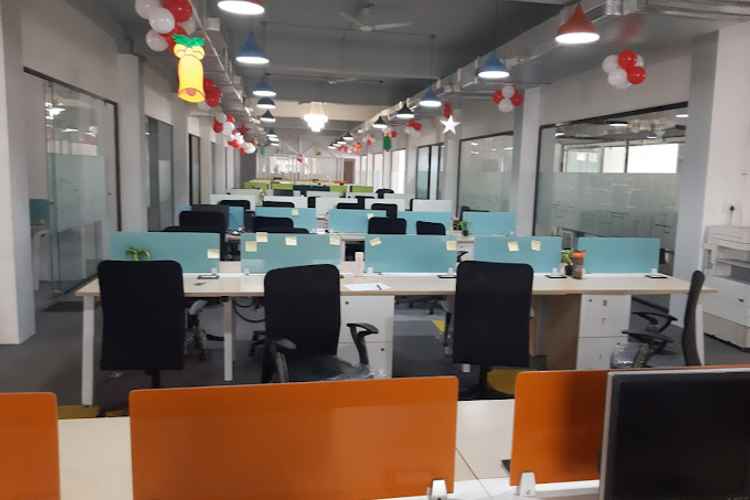
Coworking spaces provide businesses with ready-to-use offices, meeting rooms, high-speed internet, reception services, and other facilities without requiring companies to invest heavily in setting up their own premises.
Demand Is Expanding Beyond Major Cities
While Bengaluru, Mumbai, Delhi NCR, Hyderabad, and Pune remain important markets, flexible workspace operators are increasingly exploring emerging locations and Tier 2 cities.
Delhi NCR recorded strong growth in H1 2026, with flexible workspace seat leasing increasing by 152.7% year-on-year. Hyderabad also experienced substantial growth, with seat uptake rising by 170.8%.
This expansion creates opportunities for businesses that want professional offices closer to employees and customers while avoiding the costs associated with traditional office setups.
Quality Is Becoming More Important
The coworking market is also moving beyond the simple idea of providing desks. Companies now expect premium interiors, technology-enabled facilities, private cabins, collaborative areas, meeting rooms, wellness amenities, and strong employee experiences.
CBRE’s 2026 research highlights a growing “flight to quality,” with organisations increasingly looking for flexible spaces that combine flexibility with quality, identity, and operational convenience.
What Lies Ahead?
The growth of India’s flexible workspace sector is expected to continue as businesses prioritize agility, scalability, and operational efficiency. Flexible offices are increasingly becoming a complement to traditional offices rather than a temporary alternative.
For startups, SMEs, enterprises, and growing teams, coworking offers the ability to scale workspace requirements according to business needs. For companies entering new cities, it can also provide a faster route to establishing a professional presence.
Conclusion
India’s coworking market in 2026 is evolving from a niche workplace solution into a strategic component of modern business infrastructure. With strong corporate demand, expanding GCC activity, hybrid work models, and increasing demand for high-quality office environments, flexible workspaces are entering a new growth phase.
For businesses looking for flexibility without compromising professionalism, coworking and managed offices are becoming an increasingly practical choice for the future of work.